Sort buoyancy first
Do not start shooting until you are stable, neutral and clear of fragile habitat.
Academy > Diving Skills
Get the shot without losing awareness.
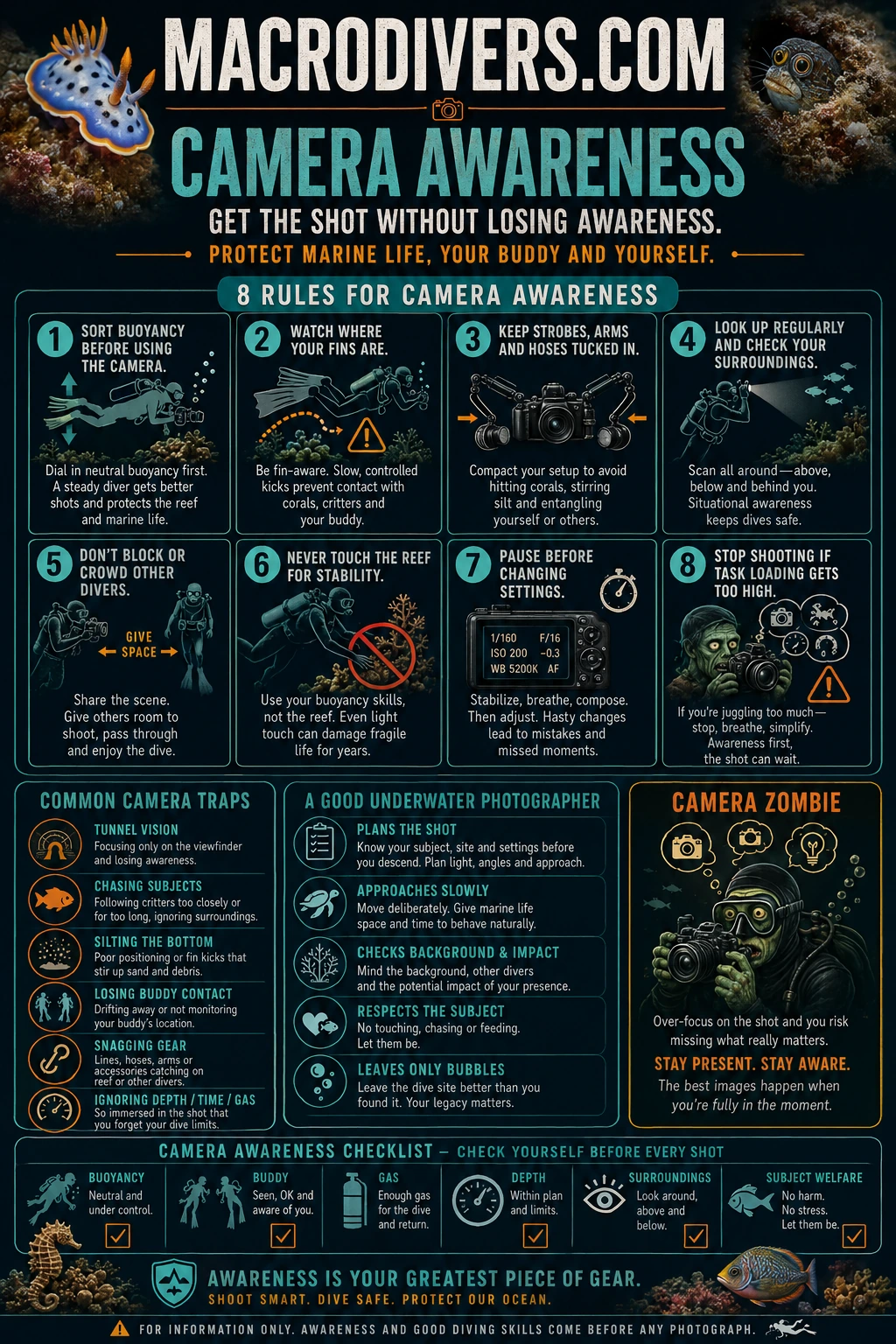
Underwater photography adds task loading. Once you start thinking about focus, lighting, composition and subject behaviour, it is easy to lose track of depth, gas, buddy position and your fins.
Camera awareness means staying present. You can still work carefully on a subject, but not at the expense of safety, marine life or the other divers around you.
The best macro photographers are calm divers first. They plan the shot, protect the subject, check the background and know when to stop.
A good photograph should never cost your awareness.
Do not start shooting until you are stable, neutral and clear of fragile habitat.
Your fins may be behind you, but their impact is still your responsibility.
Strobes, arms, hoses and lanyards should stay close enough to avoid contact or entanglement.
Check your buddy, gas, depth, no-stop time, current and the wider scene.
Share the subject and give other divers space to see, shoot and leave safely.
If you are juggling too much, stop shooting, simplify and regain control.
Camera tunnel vision is a real problem. Divers can become so focused on the screen or viewfinder that they stop monitoring the dive. That is when buoyancy errors, lost buddy contact and environmental damage become more likely.
Before every shot, run a quick check: buoyancy, buddy, gas, depth, surroundings and subject welfare. If any of those are wrong, the shot can wait.
A strong image is better when it was made cleanly, calmly and without harming the animal or the habitat.
These pages are for information and skill awareness only. They do not replace formal scuba training, in-water coaching, professional instruction, local dive briefings or good judgement. Practise new skills with a qualified instructor or experienced mentor in suitable conditions.
These skills work together. Good buoyancy, responsible behaviour and camera awareness make safer, calmer and lower-impact macro dives.
Responsible Muck Diving Buoyancy Skills Back to Diving Skills & Safety