Emergency contact route
Know who calls emergency services, coastguard, resort management, DAN or chamber advice. Check phone, radio or satellite options.
Diving Skills & Safety
A practical checklist-style guide to help divers think clearly before an emergency happens.
A good dive emergency action plan is not a document for a folder. It is a simple, usable plan that helps real people act quickly when stress, weather, distance and uncertainty are all working against them.
The best plans are short enough to use, specific to the site and checked before the first dive. For travelling underwater photographers, the plan should cover both the dive operation and the practical reality of cameras, boats, shore entries and remote locations.
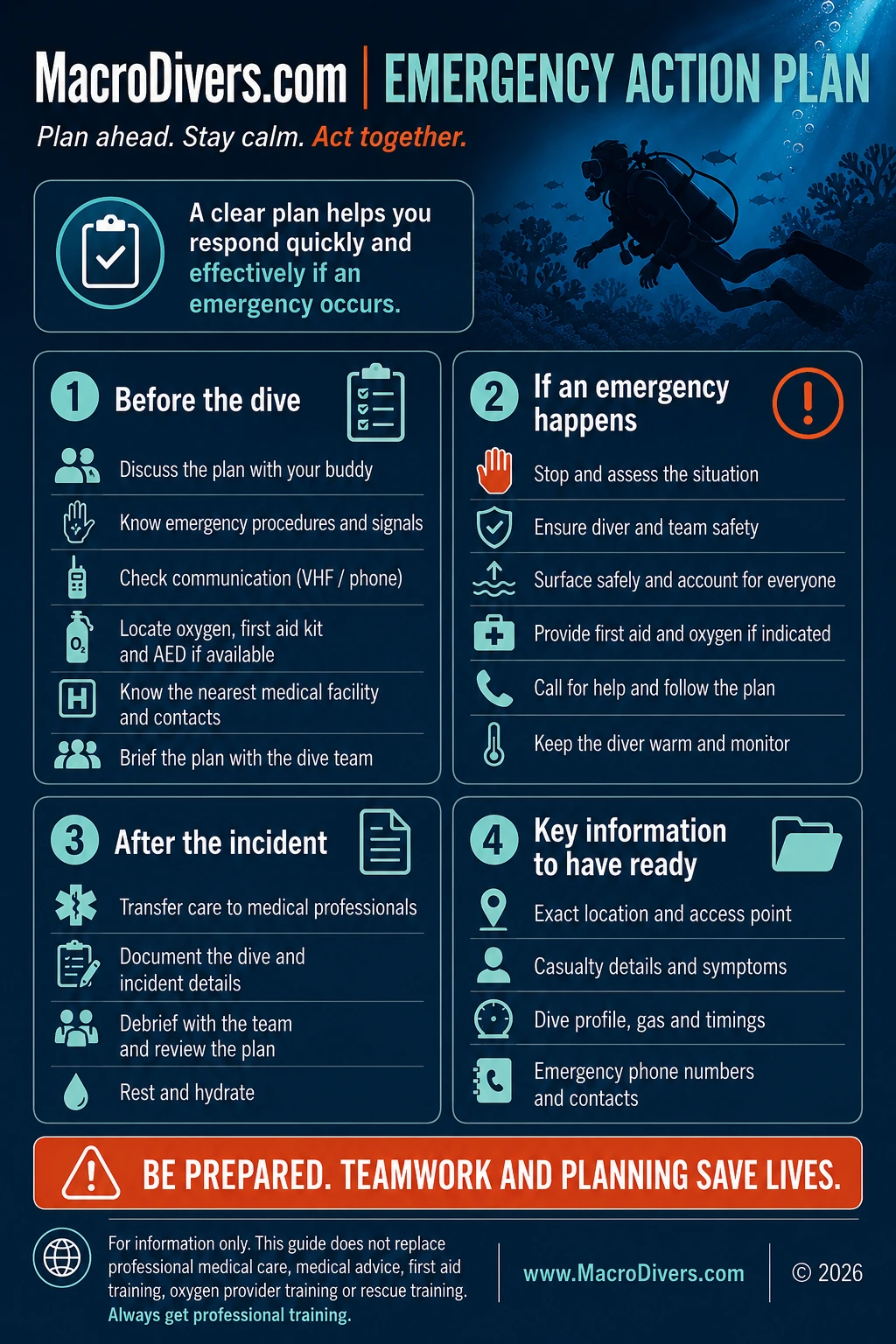
These are the questions worth asking before the incident happens.
Know who calls emergency services, coastguard, resort management, DAN or chamber advice. Check phone, radio or satellite options.
Confirm where the oxygen kit and first aid kit are kept, who is trained to use them and whether the cylinder is full.
Know the fastest realistic route from the dive site to shore, clinic, hospital, airport or chamber pathway.
One person leads the response, one manages communications, one monitors the casualty and one gathers dive information.
Record times, depths, gases, ascent details, symptoms, oxygen use, fluid intake, medical history and medications if known.
Stop further diving, account for everyone, manage equipment and keep non-essential people away from the casualty area.
When help arrives, give a short structured handover: who the casualty is, what happened, when symptoms started, what first aid has been given, current condition, relevant dive profiles and any known medical issues or medication.
For dive travel, photograph the local emergency numbers and keep them offline on your phone. Do the same with insurance, DAN membership, passport details and the resort or boat emergency procedure.
This page is for information only. It is not medical advice and it does not replace professional medical care, formal first aid training, oxygen provider training, rescue training or local emergency procedures. Always get professional training and follow the advice of qualified medical and diving professionals.