Breathing problems
Shortness of breath, chest pain, persistent cough, frothy sputum or unusual fatigue after a dive need urgent assessment.
Diving Skills & Safety
A practical guide to the post-dive symptoms that should make divers stop, reassess and seek advice early.
Diving medical problems are not always dramatic. Mild symptoms after diving can still matter, especially if they are unusual, progressive or hard to explain.
Do not try to talk yourself out of symptoms because the dive seemed easy. Decompression illness, barotrauma, breathing problems, immersion issues, dehydration, cold stress and exhaustion can all present in messy real-world ways.
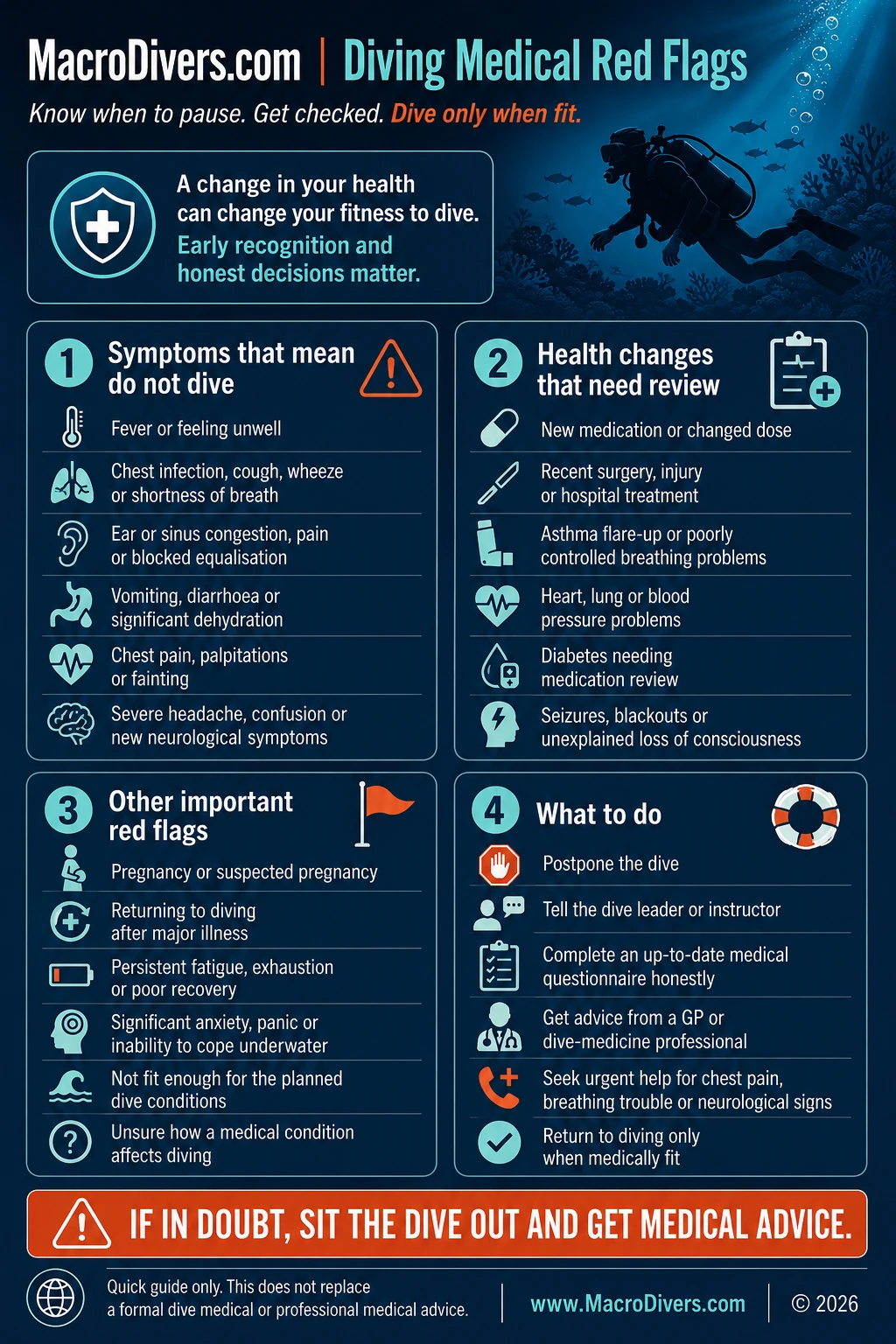
These signs deserve urgent attention rather than a wait-and-see approach.
Shortness of breath, chest pain, persistent cough, frothy sputum or unusual fatigue after a dive need urgent assessment.
Weakness, numbness, dizziness, confusion, visual changes, poor balance or difficulty walking are serious warning signs.
Unusual joint pain, mottled skin, rash, swelling or pain that starts after diving should not be dismissed.
Severe pain, hearing loss, vertigo, discharge or symptoms that continue after diving need proper medical review.
Unresponsiveness, fainting, seizure, severe confusion or abnormal breathing should trigger emergency response.
If the diver, buddy or instructor thinks something is wrong, pause the diving and escalate. That instinct is often useful.
Record dive profiles, surface intervals, breathing gas, ascent details, symptoms, onset time, hydration, exertion, cold exposure, medical history, medication and first aid already given. This information helps DAN, emergency services and medical teams.
When in doubt after diving, oxygen first aid by a trained provider, no further diving and early medical advice are usually safer than trying to continue the trip.
This page is for information only. It is not medical advice and it does not replace professional medical care, formal first aid training, oxygen provider training, rescue training or local emergency procedures. Always get professional training and follow the advice of qualified medical and diving professionals.