Sponges
Many dorid nudibranchs feed on sponges. This is why they are often found sitting directly on or beside sponge growth.
Nudibranch Basics
What nudibranchs eat can explain where they live, how they defend themselves and why identification is sometimes so difficult.
Nudibranchs are carnivores and many are highly specialised feeders. Understanding their food sources is one of the most useful shortcuts for finding and identifying them underwater.
Reference Diagram
This infographic brings together the six main food-source themes on this page: sponges, hydroids, soft corals, tunicates and bryozoans, anemones, and other nudibranchs.
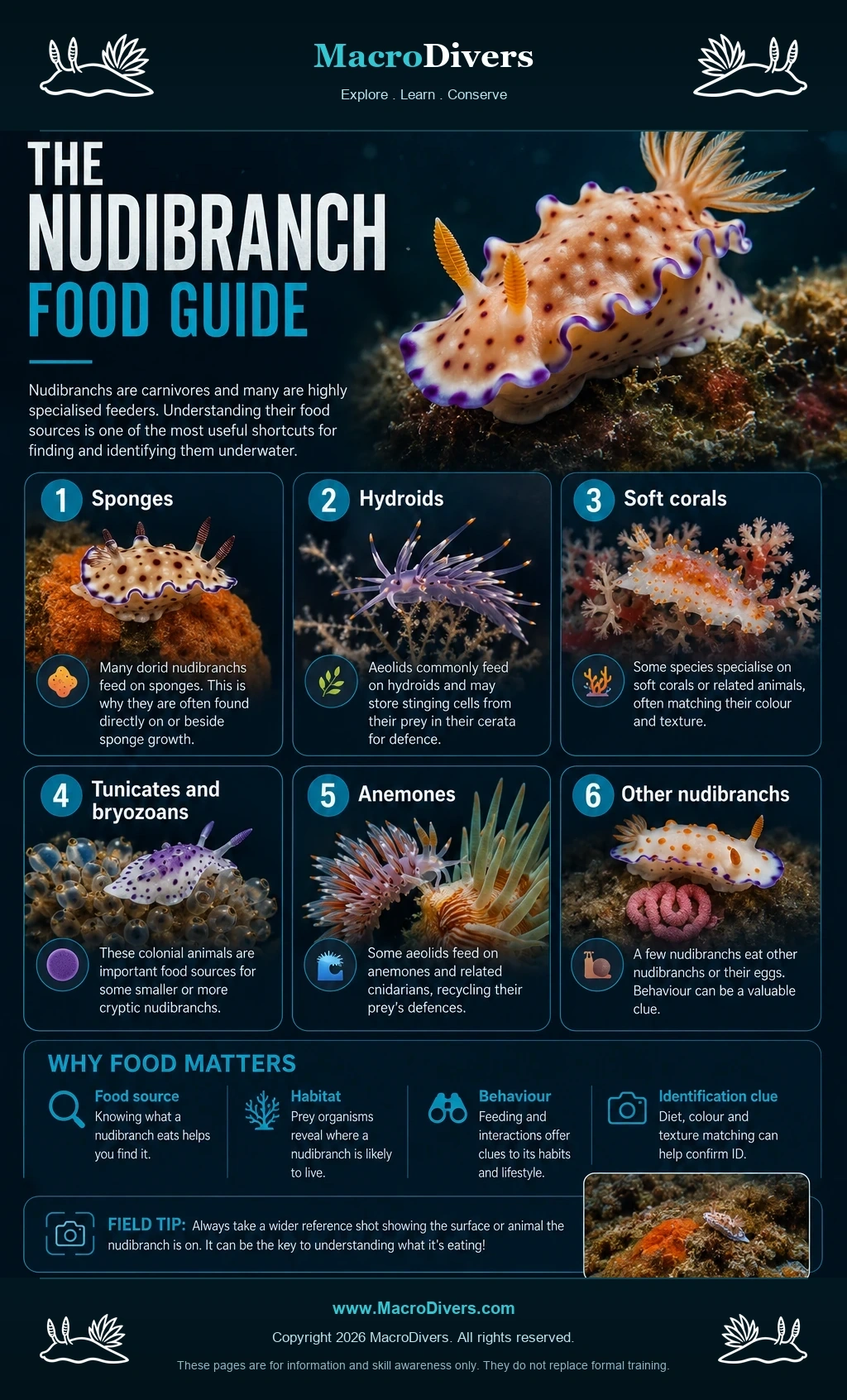
Many dorid nudibranchs feed on sponges. This is why they are often found sitting directly on or beside sponge growth.
Aeolids commonly feed on hydroids and may store stinging cells from their prey in their cerata for defence.
Some species specialise on soft corals or related animals, often matching their colour and texture.
These colonial animals are important food sources for some smaller or more cryptic nudibranchs.
Some aeolids feed on anemones and related cnidarians, recycling their prey's defences.
A few nudibranchs eat other nudibranchs or their eggs. Behaviour can be a valuable clue.
A beautiful photo of a nudibranch is useful. A photo showing the nudibranch and its food source is often much more useful. If two species look similar, the prey or surrounding habitat may help separate them.
After photographing the animal, take a wider reference shot showing the surface it is on. Sponge, hydroid, tunicate, algae or soft coral context can be extremely helpful when identifying the species later.